 Buy Gift Card

Makers Makers Makers - Cant find what you need or need something special Drop me a message and I will try to make a Plan
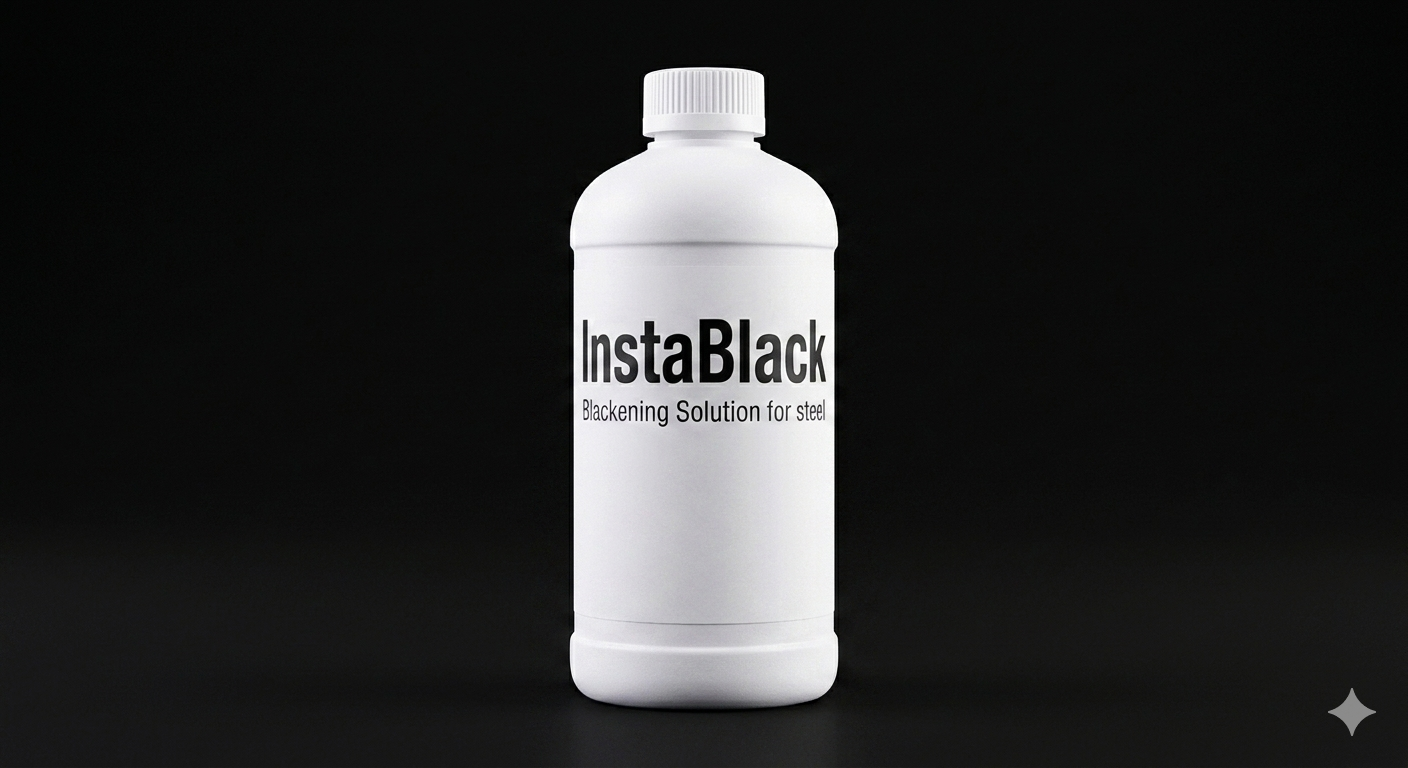
Instablack – Blackening Solution – 1 L – CONCENTRATE
R465.00
18 in stock
ROOM TEMPERATURE BLACKENING PROCESS FOR FERROUS PARTS AND IRONCASTINGS
FEATURES :
- Instablack is a simple process to operate. No elaborate equipment, power or heating is required as in other metal finishing processes.
The process can be operated at room temperature and is non-caustic, fumeless and non-splattering. - Improved productivity Due to shorter immersion and process time (3 – 5 mins), more iron and steel parts can be finished in lesser time.
- The process can be easily controlled by the addition of concentrate based on visual control as per time required for blackening.
- The process provides excellent surface properties whereby painting with high standards of adhesion.
The blackening process actually changes the metal surface instead of simply adhering to the surface.There is essentially no surface build-up or distortion. Excellent for finishing bolts, nuts, screws, precision machine surfaces.
The finish absorbs sealants and rust preventives extremely well, thus keeping them retained and in contact with the base metal much longer than rust preventives which are applied directly to the base metal. The corrosion resistance obtained will twice than that of a non-blackened surface.
PROCESS SEQUENCE
- Clean/ Degrease
- Cold water rinse
- Derust/pickling
- Cold water rinse
- 2% of volume Hydrochloric Acid dip – (Optional)
- Cold water rinse
- Blackening
- Cold water rinse
- Dry, seal, oil and age for 24 hrs – Dewatering Oil recommended
OPERATING INSTRUCTIONS
Instablack is a liquid concentrate is diluted with water to a 10% v/v solution and used as a room temperature immersion blackening process for iron and steel.
EQUIPMENT
Instablack is a mildly acidic process and therefore acid resistant tanks, filters, tumbling barrels, hooks and racks made of Polypropylene, PVC, plastic or S.S. should be used.
SURFACE PREPARATION:
Items to be blackened must be thoroughly degreased and de-rusted. Some trials should be done with sample parts to determine the degree of cleaning and activation required to produce a uniform black finish. Thorough degreasing and pickling/ activation are most important for achieving a high quality finish.
- Cleaning/Degreasing :
Soiled parts must be thoroughly cleaned/ de-greased .
- De-rusting :
It is imperative to remove all rust and oxides from the parts to be blackened by immersing them in Hydrochloric acid dip(optional). Thorough rinsing should follow de -rusting.
- Blackening :
Solution make up and use :
Instablack : (Dilute 1 part Instablack 33 with 9 parts water for a 10% by volume solution). After the bath is prepared, the pH will be approx. 2.0.
- Sealing: Use a Dewatering Oil to seal the item that is blackened
Since the structure of the black chemical conversion coating is amorphous and porous, the same needs to be sealed. Sealing is an important step and integral part of the blackening process without which the final black coating is incomplete, otherwise rusting and corrosion sets in immediately upon drying the blackened parts.
CAUTION
The Instablack solutions are mildly acidic. Avoid contact with eyes, skin and clothing. Wear eye shields, protective gloves and apron. The solutions are toxic internally. In case of contact, wash with soap and fresh running water.
NOTE:
| The data set forth in this Bulletin is believed by Zees knife supplies to be true, accurate and complete but it is not guaranteed. We cannot warrant our customers will achieve the same results from any bulletin because we do not have control over the condition of use; nor can we assume any responsibility for our products in a manner which infringes the patents of third parties. |
Be the first to review “Instablack – Blackening Solution – 1 L – CONCENTRATE”
Related products

High Carbon Steel
Price range: R515.00 through R1,700.00

R55.00

Chemicals
R1,850.00
High Carbon Steel
Price range: R395.00 through R1,150.00
Chemicals
R205.00

High Carbon Steel
Price range: R335.00 through R590.00

0000 Steel wool
R299.00

High Carbon Steel
Price range: R145.00 through R570.00
Reviews
There are no reviews yet.